

In a hair salon chair, during coffee chats, on television news, or during holiday visits… Bitcoin and cryptocurrencies have become topics discussed and debated everywhere. As the conversation rate increases, so does the curiosity about this sector.
If you’ve started hearing terms like Bitcoin, cryptocurrency, blockchain, and want to solidify your interest with knowledge, then the Beginner’s Guide is perfect for you!
TABLE OF CONTENTS
What Is Bitcoin?
Bitcoin, introduced in a paper published in 2008 by an individual or group using the pseudonym Satoshi Nakamoto, is presented as a blockchain-based payment method and digital currency.
Although its first use as a means of payment was for the purchase of 2 pizzas, opening the door for Bitcoin to be used as a real currency, its volatile price movements pose a barrier to its use as “money”. However, it wouldn’t be incorrect to describe Bitcoin as a “store of value”. Because, despite its constantly rising or falling price, Bitcoin has shown a stable outlook and continuously increasing demand in the long term. As a result, Bitcoin has established its place among the instruments people use as an investment tool today.
What Is Cryptocurrency?
A cryptocurrency is a digital currency reinforced by cryptography. It serves as an exchange medium: It can be used for buying and selling, just like regular cash, and can also be traded for fiat currencies. However, unlike traditional currencies, it has a secure ownership history recorded by participants on its network.
Bitcoin stands as the biggest and most significant example of cryptocurrency. It operates on a decentralized model within its blockchain, rather than being subject to central authorities like central banks or governments.
In the blockchain, records of all transactions are distributed across users in a decentralized ledger model. Even if a single user’s computer is attacked or records are tampered with, there will be no security issue because the others will remain unchanged.
How Does Bitcoin Work?
One of the most important concepts related to Bitcoin is decentralization. The Bitcoin network is not controlled by any authority, central bank, president, company, or organization. In today’s traditional financial system, the entire infrastructure is built on a centralized framework. However, behind Bitcoin, there are participants known as “miners.” Miners validate transactions on the network and ensure its security. Today, the Bitcoin network is decentralized thanks to the thousands of miners operating worldwide, and anyone can become a miner. As a result, all Bitcoin transactions occur directly between individuals without intermediaries.
One of the factors that make Bitcoin valuable is its “limited supply”. The main actors in the traditional financial system, such as the Dollar and Euro, can be printed in unlimited quantities. However, the production of Bitcoin is limited to 21 million units. One of the fundamental principles of financial theories is that if demand increases and supply does not increase at the same rate, the price will rise. Since 2008, demand for Bitcoin has been constantly increasing while its supply is limited, which confirms these basic principles.
What Is Blockchain?
Blockchain refers to a continuously growing transaction ledger held by interconnected blocks in computer terminology. This digital ledger, where blocks connected peer-to-peer store transaction records, is called a digital ledger.
The foundation of the blockchain technology was laid with the work of cryptography experts Stuart Haber and Scott Stornetta in the early 1990s. Building on the “hash tree” concept patented by Ralph Merkle in the 1970s, the two experts, although not fully conceptualizing their work, managed to approach the modern definition of blockchain technology.
What Is Mining?
Cryptocurrency mining, at its most basic definition, is the process where devices equipped with specialized software and hardware solve complex problems to confirm cryptocurrency transfer transactions and are rewarded with newly generated cryptocurrency as a result. In theory, anyone with a computer and internet access can engage in mining.
Transfers between wallets are transferred to a transaction pool (mempool) before being confirmed in most blockchains. These transactions are then compiled to form a block. After being verified and confirmed by devices connected to the network, these blocks are written to the blockchain.
Cryptocurrency miners verify, confirm, and maintain a copy of the blockchain.
What is Block Reward Halving (Halving)?
The Genesis Block is the first block created in the blockchain and is unique in that it does not contain information about previous blocks. In the Genesis Block, 50 Bitcoins were generated as a block reward. However, this reward was created by Satoshi Nakamoto in a non-spendable, non-transferable manner.
The Bitcoin block reward is used to define new Bitcoins awarded as a reward to cryptocurrency miners for successfully processing each block on the blockchain network. The initial block reward decreased to 25 Bitcoins on November 28, 2012, to 12.5 Bitcoins on July 9, 2016, to 6.25 Bitcoins on May 11, 2020, and further decreased to 3.125 Bitcoins with the halving event that occurred on April 19, 2024.
The reduction in the production of new Bitcoins every 10 minutes by half during certain periods is known as Halving. The reward halving occurs every 210,000 blocks and takes place approximately every four years.
Who Created Bitcoin?
Bitcoin was first introduced in 2008 under the pseudonym Satoshi Nakamoto through a paper titled “Bitcoin: A Peer-to-Peer Electronic Cash System,” published in an email group. The identity of Satoshi Nakamoto, the person who authored the paper, including their identity, birth date, gender, whereabouts, and even whether they are still alive, remains a mystery.
By concealing their identity, Satoshi Nakamoto, the creator of Bitcoin, ensured that Bitcoin could be a community-owned cryptocurrency without any central authority. With this feature, Bitcoin has become a globally accepted cryptocurrency among more than five thousand cryptocurrencies in the cryptocurrency ecosystem.
What Is Decentralization?
At its most basic and simplified level, decentralization is one of the fundamental features of blockchain technology, referring to the distribution of responsibility and the absence of control from a single center.
The decentralization of blockchain means that it is not directly dependent on a central entity such as a government, company, individual, or organization, and decision-making and control mechanisms are distributed across a network. This ensures that no one has authority or control over the transactions of the network or the individuals using it.
With the increasing popularity of Bitcoin and cryptocurrencies, the number of terms entering our daily lives has also begun to rise.
Concepts Introduced into Our Lives with Bitcoin and Cryptocurrencies!
20 Concepts
- HODL
- BLOCK
- REKT
- WHALE
- HALVING
- FUD
- SATS
- ALTCOIN
- SHITCOIN
- SHILL
- DYOR
- DIP
- FORK
- MINT
- FOMO
- To The Moon
- BEARISH
- BULLISH
- PUMP
- DUMP
The History of Bitcoin
From the publication of Satoshi Nakamoto’s Technical Paper in 2008 to the current stage of development, many significant stories have occurred in the history of Bitcoin. Under this heading, you can find important anecdotes about the history of Bitcoin.
The Bitcoin Logo
The Bitcoin logo, which is frequently encountered all over the world today, has taken its final form as a result of many different proposals and developments.
Since its initial creation, the Bitcoin logo has undergone many changes over the years. This process, initiated by Satoshi Nakamoto, came to an end with a development proposal by a user named Bitboy, and the logo used today was established.
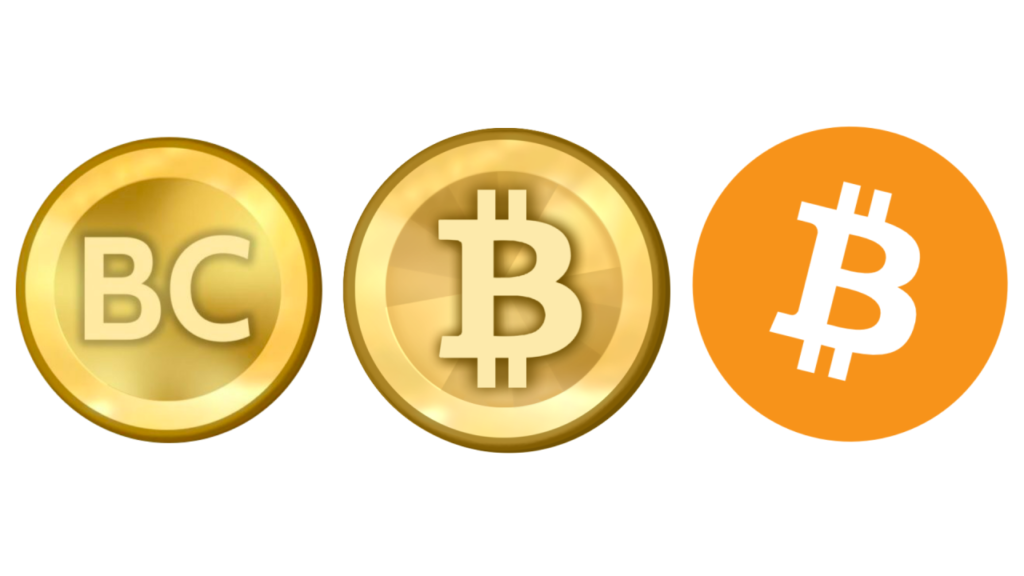
The Evolution of the Bitcoin Logo from Past to Present
Bitcoin Pizza Day
On May 18, 2010, a user named “Laszlo” on the BitcoinTalk forum posted a message stating that he wanted to pay 10,000 BTC for a few pizzas and mentioned that he would also accept orders from homemade or any pizzeria. Not forgetting to describe his favorite pizzas, Laszlo waited for responses from other users. Although some forum users showed interest, Laszlo, who did not receive his pizzas, finally announced on May 22, 2010, that he had successfully bought pizza for 10,000 BTC.
May 22, 2010, when 2 pizzas were purchased for 10,000 BTC, is considered the day of the first commercial Bitcoin transaction, and it is celebrated every year as “Bitcoin Pizza Day”